
Lion Tracking in Uganda
Lion Tracking in Uganda; While Uganda is famous across the world for its mountain gorillas and chimpanzees, the country also has an amazing adventure waiting for you, one which few people know about. Lion tracking is a safari adventure based on scientific research in Uganda that enables tourists to see the predators of Africa while at the same time being part of their conservation efforts. This is different from a normal game drive in the sense that with this adventure, you are guaranteed to see the lions and learn a lot about them.
This engaging safari experience takes place only at Queen Elizabeth National Park, the most biodiverse savannah park of Uganda, which is a home of around 250 lions. With the help of the professional assistance of the expert guidance of Uganda Carnivore Program (UCP) team, lion tracking safari gives visitors a chance to meet these magnificent attractions in their natural surroundings while at the same time gaining knowledge on their behavior and the threats they face in their natural habitats.
What is Lion Tracking in Uganda unique?
Lion tracking safari is a unique safari experience that extends well beyond just a game drive. The activity is done in association with the Uganda Carnivore Program, which is a research program responsible for monitoring the population of predators within Queen Elizabeth National Park. The activity entails the use of radio telemetry equipment to trace lions with tracking collars on them, thus helping people to be able to find them easily and spend time observing them.
The unique thing about lion tracking is the education and conservation-based approach. This enables participants to interact with the researchers in the field and learn about the lions. There are lions that you can observe while feeding, playing, mating, grooming their cubs, or resting under the shade of the acacia trees. This is your chance to see how the vital conservation process is taking place to protect the lions of Uganda whose number is 291 currently.
Where is Lion Tracking Done in Uganda?
The lion tracking exercise takes place only within Queen Elizabeth National Park situated in the western part of Uganda in the districts of Kasese, Kamwenge, Rubirizi, and Rukungiri. The exercise is carried out in the Kasenyi Plains since this is where most of the lions in the national park are found.
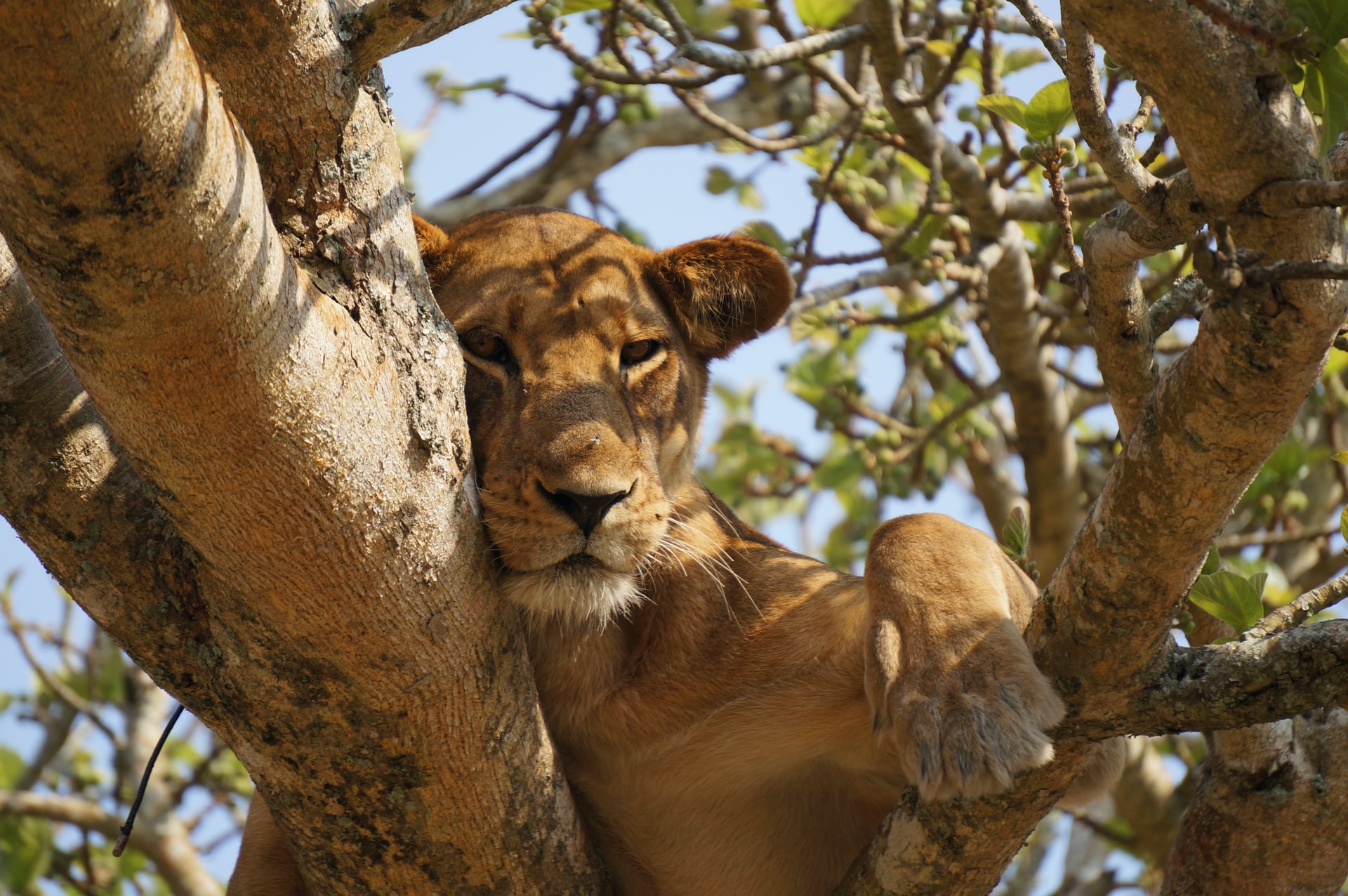
Lions that climb trees are popularly known as “tree-climbing lions,” and these are found within the Ishasha sector. Even though the process of lion tracking does not happen in Ishasha, the tracking process can be done alongside a game drive in Ishasha to enjoy the amazing phenomenon of lions resting on top of fig and acacia trees.
Expectations During Lion Tracking in Uganda.
During the process of lion tracking in Uganda, you get a briefing by the Uganda Carnivore Programme. You will learn all about the behavior of lions, conservation efforts, and how the tracking process is done. This activity is carried out either in the morning at 8:00 am or in the evening at 4:00 pm.
Participants will make use of the radio receivers to trace down the collared lions under the supervision of the armed rangers and research personnel. This process will take around 2 to 3 hours and will be done in a 4×4 safari car, although there might be a little amount of walking on foot too. However, the number of participants will be kept limited to ensure a better experience.
Once the pride has been found, there are chances to view them from a safe distance, usually between 20 meters to 50 meters away from the vehicle. It is okay for drivers to go off the established trail while tracking since the lions may not always be found along the tracks used on regular game drives.
Best Time to Track Lions in Uganda.
It is possible to track lions at any time of the year; however, the dry season is believed to be the best time for tracking. The dry season occurs between June and September, and December to February. Wildlife also concentrates around water sources during these months, increasing your chances of sightings.
The best times for tracking are early mornings and late afternoons because that is when lions are very active. The heat during noon may make them look for shady areas to cool off.
Cost of Lion Tracking Permits.
Lion tracking requires a special permit in addition to the park entry fee. The cost varies depends on your nationality for foreign non-residents, the permit costs between $100 and $200 per person. Foreign residents typically pay $80 to $150, while East African citizens pay approximately 100,000 to 200,000 Uganda Shillings. It is recommended to book permits in advance, as spaces are limited to protect the animals and ensure a quality experience.
Conclusion: Lion tracking safari in Uganda is not only an exciting game drive, but it is also a great conservation activity through which tourists have a chance to learn about and take part in one of the many efforts aimed at conserving Africa’s top predator. Through such activity, one gets a unique safari experience while at the same time supporting the Uganda Carnivore Program. For anyone who loves nature and wildlife, lion tracking in Queen Elizabeth National Park should not be missed.