
Queen Elizabeth National Park
Queen Elizabeth National Park is Uganda’s most biodiverse protected area and, for many experienced safari travelers, the country’s most satisfying all-round wildlife destination.
The park stretches across approximately 1,978 square kilometers of open savannah grassland, wetlands, crater lakes, and riverine forest along the floor of the Albertine Rift Valley in western Uganda, the park delivers a concentration and diversity of wildlife experiences that few destinations anywhere in Africa can match within a comparable area.
With over 95 mammal species and more than 600 recorded bird species one of the highest counts of any national park in the world Queen Elizabeth rewards every type of wildlife enthusiast, from the big cat devotee to the dedicated birdwatcher to the traveler simply seeking immersion in a landscape of extraordinary natural beauty.
Main Attractions in Queen Elizabeth National Park.
Wildlife.
Queen Elizabeth National Park is one of the most biodiverse wildlife havens, beyond that the park is a home to over 95 mammal species including the large herds of the African elephants and buffaloes on the Kasenyi plains, elusive leopards, and spotted hyenas, warthogs, and Uganda kobs in huge numbers.
Bird lovers find paradise here too with over 600 species from the majestic African fish eagle to the colourful kingfisher along Kazinga channel, where hippos, crocodiles and elephants gather for water. The mix of savannah, forest, lakes and wetlands makes every game drive feel like flipping through different worlds in one day.
Chimpanzees.
While gorilla trekking takes place in Bwindi, Queen Elizabeth’s proximity to Kibale National Park and its own Kyambura Gorge make the broader region one of the most primate-rich safari circuits in Africa. The park’s Kyambura Gorge hosts a habituated chimpanzee community whose trekking experience, in a dramatic, cathedral-like river gorge cutting through open savannah, creates a setting unlike any other chimpanzee habitat in Uganda.
Tree-Climbing Lions.
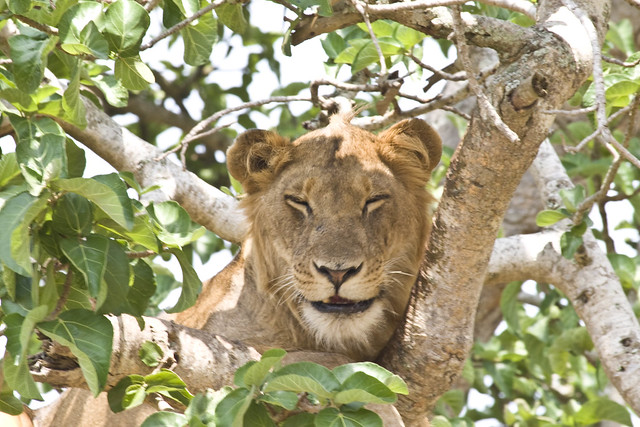
The Ishasha sector in the park’s southern section hosts one of the most celebrated and most unusual wildlife phenomena in Africa lions that regularly rest in the branches of giant fig trees, a behavior recorded in only two locations globally. The sight of a pride draped across the horizontal branches of a fig tree at several metres above the ground is one of the most visually arresting wildlife encounters available anywhere on the continent.
Kazinga Channel.
The forty-kilometer natural waterway connecting Lake George and Lake Edward runs through the heart of the park and supports one of the largest hippopotamus populations in Africa alongside enormous crocodiles, abundant elephant herds, and over six hundred bird species observables from its banks.
Crater Lakes.
The broader Queen Elizabeth landscape is studded with dramatic volcanic crater lakes whose deep, circular forms and mineral-rich waters create a series of scenic viewpoints of unusual beauty. The crater lakes around Katwe and Bunyaruguru are among the most photogenic landscapes in the region.
Activities to do in Queen Elizabeth National Park.
Kazinga Channel Boat Cruise.
The launch cruise on the Kazinga Channel is Queen Elizabeth’s signature experience, departing from the Mweya jetty in morning and afternoon sessions. Close encounters with hippos, Nile crocodiles, and waterbirds at the water’s edge are virtually guaranteed, and the boat’s positioning at water level creates an intimacy of observation that no land-based alternative can replicate. The afternoon cruise offers particularly beautiful light conditions for photography.
Game Drives on Kasenyi Plains.
Morning game drives across the Kasenyi Plains are the most reliable route to lion, elephant, buffalo, and Uganda Kob sightings in the northern sector, with the plain’s open visibility allowing long-distance scanning across a landscape alive with wildlife. Evening drives bring predators back to their feet after the midday rest and generate some of the most productive big cat observation of the day.
Chimpanzee Tracking in Kyambura Gorge.
Descending into the forested gorge from the open savannah above is one of Uganda’s most distinctive ecological transitions the temperature drops noticeably, the vegetation closes overhead, and the sounds of the forest replace the open savannah landscape within minutes of entering the gorge.
Ishasha Tree-Climbing Lion Drives.
A full morning game drive in the Ishasha sector, guided by a ranger with current knowledge of the resident pride locations, is the most reliable approach to a tree-climbing lion sighting. Plan at least one night in the Ishasha area to maximize time in the sector.
Birdwatching.
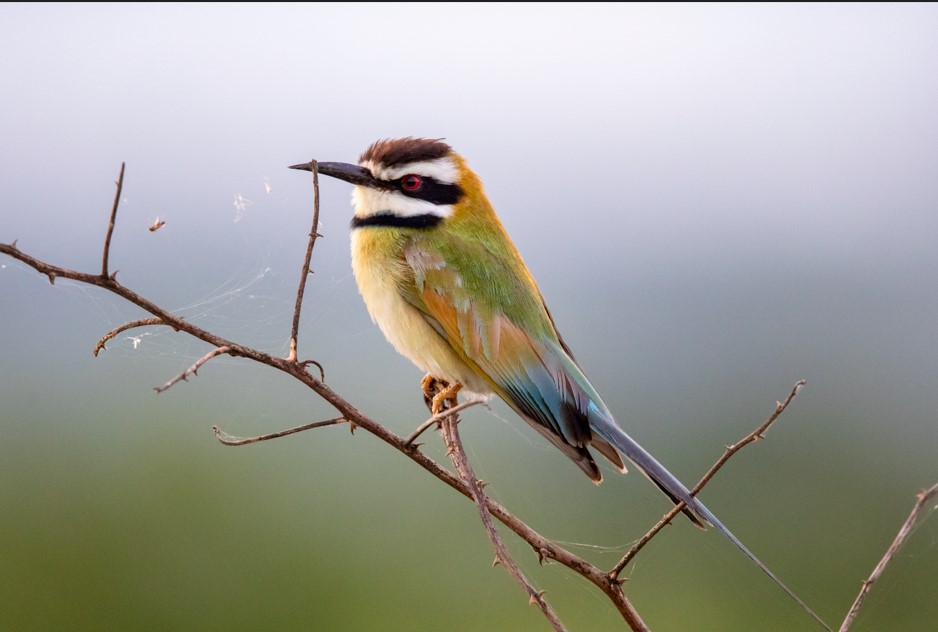
With over 600 species recorded, Queen Elizabeth is one of Africa’s finest birding safari destinations. The Maramagambo Forest, Kazinga Channel edges, and Mweya Peninsula are particularly productive, with African fish eagles, shoebill storks, grey crowned cranes, and the spectacular African skimmer all regularly observed.
Salt Lick Visits at Katwe.
The mineral-rich salt deposits around Lake Katwe attract concentrations of elephants, buffalo, and Kob, creating productive late afternoon wildlife viewing opportunities alongside guided community walks that provide direct engagement with Katwe’s traditional salt-mining community.
Best Time to Visit Queen Elizabeth National Park.
Queen Elizabeth National Park can be visited year-round, but the dry seasons between June and September and December and February offer the most reliable game viewing conditions, with firmer roads, lower vegetation, and wildlife concentrated around permanent water sources. The Kazinga Channel boat cruise is rewarding at any time of year. The Ishasha tree-climbing lion sighting is most consistently reported during the dry season months when the figs the lions favor are bearing fruit. The wet seasons of March through May and October and November bring lush landscape conditions and excellent birdwatching, with migratory species augmenting the resident bird community during the November passage.
Where to Stay in Queen Elizabeth National Park.
On a Uganda safari, to Queen Elizabeth National Park offer tourists with a variety of the accommodation facilities during their stay and these are categorized into different options including, budget, mid-ranger and luxury options.
Mweya Safari Lodge; the park’s flagship accommodation on the Mweya Peninsula, offering comfortable rooms with sweeping channel and rift valley views
Kyambura Gorge Lodge; a beautifully positioned mid-range accommodation overlooking the gorge with outstanding guiding and direct chimpanzee trekking access
Jacana Safari Lodge in Ishasha, is among the accommodation option for tree-climbing lion seekers in the park’s southern sector
Enganzi Game Lodge, a mid-range lodge in the northern sector offering comfortable accommodation at a competitive price point.
Bush Lodge at Mweya a budget-friendly community-run option within the park boundary
How to Get to Queen Elizabeth National Park.
Queen Elizabeth National Park is located approximately 420 kilometers from Kampala in western Uganda a five to six hour road journey via Mbarara town on well-maintained tarmac roads. Most visitors incorporate a Lake Mburo stopover to break the journey productively. Charter flights between Entebbe and Kasese airstrip, approximately thirty minutes from Mweya, are operated by Aerolink Uganda and BAR Aviation and reduce the transfer to under one hour. Most Uganda safari operators include Queen Elizabeth as part of a western circuit combining the park with Kibale National Park, Bwindi Impenetrable National Park, and Lake Mburo.
Conclusion; Queen Elizabeth National Park is the most ecologically complete safari destination in Uganda a park where tree-climbing lions share a landscape with hippo-filled channels, chimpanzee-inhabited gorges, and one of Africa’s greatest concentrations of birdlife. Whatever attracts you to it, the park will exceed the expectation you arrived with and leave you, as Uganda’s finest destinations invariably do, already planning the return.