
Cultural Tours in Uganda
Cultural Tours in Uganda: Uganda is celebrated across the world for its mountain gorillas, its chimpanzees, and its extraordinary national parks, but to experience only the wildlife is to know only half the country.
Uganda’s human story is equally rich, layered across more than 56 distinct ethnic groups, each with its own language, traditions, music, ceremonial life, and relationship with the land. Cultural tourism in Uganda has evolved over the last decade to become one of the most lucrative tours in Uganda, giving tourists a glimpse of traditions that have remained untouched by the dynamics of modernity. Starting from the traditional cultures of the Buganda and Bunyoro Kingdoms to the semi-nomadic culture of Karamojong and even the forest-dwelling community of the Batwa, the cultural tour in Uganda is about experiencing human diversity at its best.
Buganda Kingdom.
For any tour of the culture of Uganda, there is no doubt that one will need to interact with the Buganda Kingdom, which is the largest and most prominent among the ancient kingdoms of Uganda. The Baganda people, who live in the central part of Uganda, in and around Kampala and Buganda, are a cultural entity that has had its monarchy for over 600 years.
The Kasubi Tombs, located at the edge of Kampala, function as the spiritual and ceremonial core of the Buganda Kingdom, the UNESCO World Heritage Site that houses four Kabakas, or kings, of Buganda within a large thatched royal enclosure constructed solely using organic substances such as bark cloth, reeds, and elephant grass.
The tour of the Kasubi Tombs is one of great atmosphere and is conducted by the official guardians of the site, who will inform visitors about the spiritual importance of the site, the burial practices, and the place of the tombs within contemporary Buganda culture. The main structure of the Kasubi Tombs – Muzibu Azaala Mpanga – suffered partial damage in 2010 and continues to be rebuilt.
Lubiri Palace at Mengo is the official palace of the Kabaka of Buganda and provides guided tours for tourists through the history of the kingdom, starting from its establishment to its current state in the colonial and post-colonial period. The Uganda Museum in Kampala, one of the oldest museums in East Africa, provides essential broader context for understanding not just Buganda but Uganda’s full ethnic and cultural mosaic, with exhibits covering traditional musical instruments, ceremonial dress, agricultural tools, and the history of the country’s many kingdoms.
Ancient Kingdom of Bunyoro-Kitara.
West of the Buganda heartland, in the region stretching between Lake Albert and Murchison Falls, lies the territory of the Bunyoro-Kitara Kingdom, once the most powerful empire in the Great Lakes region, whose influence extended across much of present-day Uganda, Rwanda, and the DRC. Bunyoro Kingdom’s cultural heritage is centered on Hoima, where the Omukama, or king, maintains his court and where visitors can arrange cultural interactions that illuminate the kingdom’s extraordinary history.
Karuzika Royal Palace in Hoima welcomes cultural visitors and provides guided explanations of Bunyoro’s royal traditions, including the elaborate protocol surrounding the Omukama, the significance of royal drums, and the oral histories that have preserved the kingdom’s story across generations. The nearby Mparo Tombs, where several Bunyoro kings are buried, offer a quieter and more contemplative cultural experience similar in spirit to the Kasubi Tombs, set within a landscape of rolling green hills that feels entirely removed from the pace of modern Uganda.
Batwa Pygmies.
Among the most poignant and important cultural experiences available in Uganda is time spent with the Batwa people the original forest-dwelling inhabitants of the montane forests of southwestern Uganda, who lived in intimate symbiosis with the same forests now protected as Bwindi Impenetrable National Park and Mgahinga Gorilla National Park. When these parks were gazetted in the early 1990s, the Batwa were evicted from their ancestral forest homes without adequate compensation or resettlement support, a displacement whose consequences continue to shape their community today.
Responsible Batwa cultural experiences offered through community-based tourism initiatives near Bwindi and Mgahinga take visitors into the forest with Batwa guides who share traditional knowledge of medicinal plants, hunting techniques, honey gathering, and the spiritual relationship their community maintained with the forest for thousands of years. These experiences are designed to generate direct income for Batwa families while preserving and celebrating a cultural heritage that is genuinely at risk of being lost within a generation. Travelers who combine gorilla trekking with a Batwa cultural experience gain a far richer understanding of the human history woven into the same forest landscape where the gorillas live.
Tourism within the Batwa culture should be done in a delicate manner by using operators who have an excellent relationship with the Batwa leaders such that some income from the tourism activities goes to the Batwa community.
Tooro Kingdom and the Rwenzori Foothills.
The western region of Uganda, where the Rwenzori Mountains rise dramatically from the floor of the Albertine Rift, is home to the Tooro Kingdom, a traditional monarchy centered on Fort Portal whose cultural heritage blends royal ceremonial traditions with the extraordinary natural landscape of the region.
The Tooro Kingdom Palace in Fort Portal is open to cultural visitors and offers guided tours explaining the history of the kingdom, the role of the Omukama of Tooro, and the relationship between the royal family and the broader Batooro community.
Fort Portal is indeed an excellent cultural base for exploring its surroundings, taking in a trip to the palace together with a tour to the Amabere Ga Nyinamwiru caves, which have immense cultural significance to the Batooro culture, being linked to the legend of a princess whose story is told by the locals in such great detail.
Crater lakes dotting the tea-growing hills surrounding Fort Portal offer beautiful scenery for community walks where tourists will have the opportunity to interact with farmers, traditional healers, and artisans who make bark cloth, one of Uganda’s most unique and fascinating crafts.
Karamoja.
Located in the far northeast of Uganda, on the border with Kenya and South Sudan, the semi-arid region of Karamoja is the native territory of the Karamojong tribe, who are semi-nomadic pastoralists with a unique culture characterized by cattle herding, social stratification into age groups, and intricate beadwork practices. This region has long been one of the least visited destinations in Uganda; however, cultural tourism has started developing here due to well-managed efforts.
Visits to Karamojong manyattas, traditional homestead enclosures built from timber and mud within a protective fence of thorned branches, offer an encounter with a community that measures wealth in cattle and maintains ceremonial traditions around rites of passage, marriage, and seasonal migration that have changed relatively little over centuries.
The beadwork worn by Karamojong women is among the most visually striking in Uganda, with colors and patterns carrying specific social and ceremonial meanings that local guides are able to interpret for visitors.
Kidepo Valley National Park, one of Africa’s most remote and spectacular wildlife destinations, sits within Karamoja and can be combined with cultural village visits to create one of Uganda’s most immersive and off-the-beaten-path safari experiences.
Ndere Cultural Centre.
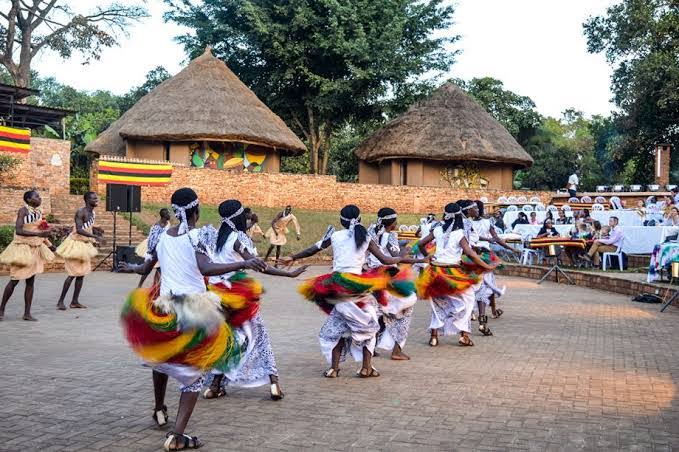
For travelers based in Kampala who want an accessible and beautifully curated introduction to Uganda’s cultural diversity before venturing into the regions, the Ndere Cultural Centre in Ntinda offers weekly performances that bring together music, dance, and storytelling traditions from across Uganda’s ethnic groups onto a single stage.
The Ndere Troupe’s performances are internationally acclaimed, combining extraordinary musicianship with acrobatic dance and the kind of theatrical storytelling that makes the traditions of the Acholi, Baganda, Banyankole, Langi, and many other groups immediately accessible and emotionally engaging to international visitors. An evening at Ndere is one of Kampala’s finest cultural experiences and an ideal orientation for a broader cultural tour of the country.
Practical Advice for Cultural Tourism in Uganda.
The most rewarding cultural experiences in Uganda are those arranged through community-based tourism initiatives or reputable cultural tour operators who maintain genuine relationships with the communities involved.
This guarantees that any money made from tourism actually gets into the hands of the very people whose culture is being marketed and showcased, without passing into the hands of anyone who is not accountable to the community.
Visitors must show genuine interest and respect when going to visit different cultures, asking questions through guides, adhering to the rules surrounding taking photos and visiting places of worship, and most importantly, listening to the stories instead of just capturing images. Most cultural tours in Uganda are live events, not theatrical ones meant to showcase the culture for the visitors.
Conclusion: Cultural tourism in Uganda opens a dimension of the country that the national parks, as magnificent as they are, cannot offer on their own. The ancient kingdoms, the forest communities, the pastoral peoples of the northeast, and the vibrant performing arts traditions of Kampala together constitute a human heritage as extraordinary as any wildlife experience Uganda has to offer.
For travelers willing to look beyond the gorillas and the game drives, a cultural tour through Uganda’s diverse communities delivers a depth of connection with this remarkable country that stays with you long after the safari is over.