
Guided Nature Walks in Uganda
On a guided nature walk in Uganda, everything changes. On a Uganda safari, there is a quality of attention that only walking brings. On a game drive, the landscape passes in frames: dramatic, beautiful, but always slightly removed behind glass and steel.
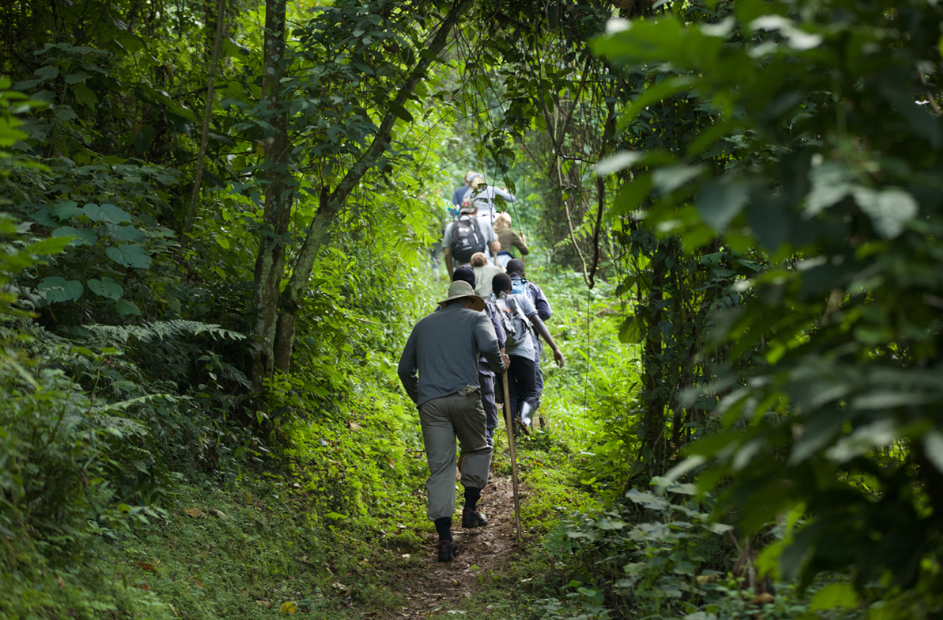
The forest floor comes alive beneath your boots. The scent of wet soil and ginger permeates the atmosphere. The guide stops and, raising his hand, points out the knuckles of the chimps that were imprinted into the mud just a few hours ago. This is how Uganda is best seen, and for the adventurous traveler who will take time to walk the land, the payoff is amazing.
Uganda’s remarkable biodiversity—over 1,000 bird species, more than 350 mammal species, and an astonishing variety of plant life spread across habitats ranging from montane forest to savanna woodland to papyrus wetland—makes it one of the finest walking safari destinations in Africa. Nature walks are available at almost all major national parks and conservation sites in the nation, each providing a unique experience of Mother Nature.
Bwindi Impenetrable National Park.
Bwindi Impenetrable National Park is mainly known as the most favored gorilla trekking site in Uganda, but the forest offers much more to nature walks than just gorillas. The park protects one of the most biodiverse forests in Africa, harboring over 200 tree species, 120 mammal species, and more than 350 bird species within its ancient montane landscape.
Guided forest walks in Bwindi distinct from the gorilla trekking safari experience itself take visitors through the undergrowth on trails that wind between enormous fig trees and stands of wild banana, with guides pointing out the medicinal plants used by local communities for generations, the nests of African golden cats pressed into mossy hollows, and the extraordinary parade of birdlife that moves through the forest canopy in the morning hours.
The Munyaga River Trail in the Buhoma sector is particularly rewarding, following the course of a forest stream through terrain that opens occasional views across the valley to the hills beyond. Waterfall walks in the Nkuringo sector offer a different character: steeper terrain, more dramatic vistas, and the sound of cascading water accompanying the walk throughout.
For travelers combining a Bwindi nature walk with gorilla trekking, the experience of moving through the same forest on foot at a slower pace, with greater attention to the smaller details of the ecosystem, deepens the sense of connection with a landscape that is genuinely one of the most ecologically irreplaceable on earth.
Kibale Forest National Park.
Kibale Forest National Park in western Uganda is home to the highest density of primates of any forest in Africa, and a guided nature walk through its interior is one of the most exhilarating wildlife walking safari experiences the continent offers. Thirteen primate species inhabit Kibale, including chimpanzees, red colobus monkeys, grey-cheeked mangabeys, L’Hoest’s monkeys, and olive baboons, and a well-guided walk through the forest almost guarantees multiple primate sightings alongside a rich diversity of forest birds and butterflies.
Bigodi Wetland Sanctuary, located just outside the park boundary near the town of Kamwenge, offers one of Uganda’s finest community-based nature walk experiences. Managed by the Kibale Association for Rural and Environmental Development, the Bigodi wetland walk traverses a papyrus swamp and forest edge habitat that supports an extraordinary concentration of birdlife; over 200 species have been recorded here, including the great blue turaco, the African grey parrot, and the papyrus gonolek alongside primates, mongoose, and the occasional sitatunga antelope moving through the reed beds.
The walk is guided by community members trained as naturalists, and the revenue generated supports local schools, health programs, and conservation education in the surrounding villages. Bigodi is consistently cited by birders and nature lovers as one of the most rewarding short walks anywhere in Uganda.
Queen Elizabeth National Park.
Queen Elizabeth National Park in southwestern Uganda is most commonly explored by game drive and boat cruise, but the park’s guided nature walks offer a perspective on its extraordinary landscape that vehicles simply cannot provide. The Kyambura Gorge walk, which descends into a dramatic river gorge carved into the edge of the savanna, is one of the most distinctive walking experiences in Uganda, combining the geological spectacle of the gorge itself with the possibility of encountering the isolated chimpanzee community that inhabits its forested interior.
The Maramagambo Forest, which occupies the southeastern corner of the park, rewards forest walkers with bat cave visits where enormous python colonies coil in the darkness above the heads of roosting bats in a scene that manages to be simultaneously unsettling and magnificent and guided walks through forest that harbors forest elephants, chimpanzees, and a wealth of forest birds rarely encountered on the open savanna drives.
The Explosion Craters area in the north of the park offers crater rim walks with panoramic views across a volcanic landscape of circular lakes and green hillsides that feels more like the Scottish Highlands than equatorial Africa.
Rwenzori Mountains National Park.
For serious trekkers and mountain walkers, Rwenzori Mountains National Park offers some of the most dramatic and challenging guided walking in East Africa. The Rwenzoris, the fabled Mountains of the Moon described by Ptolemy in the second century, rise to over 5,100 meters above sea level on the Uganda-DRC border, their upper reaches permanently shrouded in cloud and draped with glaciers, giant lobelias, and groundsel trees that create a surreal high-altitude landscape unlike anything else in Africa.
Multi-day guided trekking routes through the Rwenzoris ascend through a sequence of distinct vegetation zones from montane forest through bamboo and heath into the extraordinary afro-alpine moorland of the upper mountain, with the Central Circuit Trek taking seven to nine days to complete the full loop around the main peaks.
Shorter walks from the Nyakalengija trailhead are available for travelers who want a taste of the mountain landscape without committing to a full multi-day expedition, exploring the lower forest zones where colobus monkeys move through the tree canopy above rushing mountain streams.
Murchison Falls National Park.
Murchison Falls National Park offers guided nature walks that combine riverine wildlife viewing with some of Uganda’s most dramatic scenery. The Top of the Falls walk, a short but intensely rewarding trail from the upper bank to the point where the Nile forces itself through its narrow rock cleft, is one of the most accessible and spectacular short walks in Uganda, taking no more than 30 minutes but delivering views of the falls and the gorge below that reward every step.
Longer guided walks along the northern bank of the Nile move through woodland and grassland habitats where encounters with Uganda kob, waterbuck, oribi, and bushbuck are common and where the riverside vegetation supports an exceptional diversity of birds, including the rare shoebill stork, in the surrounding wetlands.
The delta area where the Victoria Nile spreads into Lake Albert is accessible by a combination of boat and guided walk, offering one of Uganda’s most productive birdwatching environments with over 450 species recorded within the park.
Lake Mburo National Park.
Lake Mburo National Park holds the distinction of being one of the few places in Uganda where guided walking safaris can be conducted in genuinely open savanna habitat, among free-roaming wildlife.
The park’s relatively compact size, the absence of lions and elephants in most walking areas, and the high density of plains game—zebra, impala, topi, eland, and warthog—make it an ideal destination for travelers who want to experience the textures and sounds of the African savanna on foot rather than from a vehicle.
Guided walks at Lake Mburo are led by armed Uganda Wildlife Authority rangers and knowledgeable guides who interpret the bush at a level of detail that game drives rarely allow, explaining the territorial marking behavior of impala, identifying the calls of the African fish eagle echoing across the lake, and pointing out the extraordinary variety of reptile and insect life that goes largely unnoticed from a vehicle.

The lakeside environment also supports hippos, crocodiles, and a rich water bird community, making the walking trails that skirt the shoreline particularly productive for wildlife observation.
Conclusion: Guided nature walks in Uganda offer a form of engagement with the natural world that no vehicle-based safari experience can replicate. Whether you are moving through the ancient forest of Bwindi at dawn, watching chimpanzees feed in Kibale’s cathedral trees, standing at the rim of a volcanic crater in Queen Elizabeth, or walking quietly through Lake Mburo’s zebra-dotted grassland, the experience of Uganda on foot brings you into direct sensory contact with a landscape of extraordinary richness and beauty.
For travelers looking not just to observe Uganda’s wildlife but to feel genuinely present within it, a guided nature walk is where the deepest memories are made.