
Main Tourist Attractions in Bwindi Impenetrable National Park | Mountain Gorillas
Main Tourist Attractions in Bwindi Impenetrable National Park. Bwindi Impenetrable National Park is a safari destination whose reputation rests on one defining, globally celebrated wildlife encounter and yet the park’s significance extends far beyond that single headline attraction into a depth of natural, cultural, and conservation richness that makes it one of the most genuinely multi-layered destinations in Africa. Understanding the full range of what Bwindi offers not simply as a list of activities but as a collection of living, breathing, irreplaceable attractions that exist independently of the tourist infrastructure built around them is the beginning of an honest appreciation for why this ancient forest deserves its status as one of the most important places on earth.
Mountain Gorillas.
The mountain gorilla is Bwindi Impenetrable National Park’s defining safari attraction the single most compelling reason that travelers from every corner of the world make the considerable journey to the Kigezi highlands of southwestern Uganda. Bwindi is home to more than 500 individual mountain gorillas across more than 25 fully habituated gorilla families, making it the single most important mountain gorilla conservation site anywhere on earth. These are not captive animals, not semi-wild populations managed in enclosed reserves, and not animals whose encounters are engineered for tourist convenience. They are genuinely wild mountain gorillas the largest primates on earth whose habituated families allow a maximum of eight visitors per day to spend one hour in their presence in the ancient forest that has been their home for millennia.
The mountain gorilla’s status as an attraction extends beyond its individual magnificence. It is the living proof of one of the most successful conservation recoveries in modern wildlife history a species whose global population has grown from fewer than 300 individuals in the 1980s to over 1,000 today through the combined efforts of anti-poaching enforcement, veterinary intervention, community-based conservation, and the sustainable tourism model that gorilla trekking represents. Every mountain gorilla in Bwindi is simultaneously an extraordinary animal and a conservation symbol of profound global significance.
The Ancient Forest.
The Bwindi Forest itself is a tourist safari attraction of equal standing to the mountain gorillas that inhabit it a fact that is frequently overlooked in the understandable excitement of the gorilla encounter but that becomes unmistakable to every visitor who spends meaningful time within the canopy. Bwindi Impenetrable National Park encompasses 331 square kilometers of ancient montane forest that has remained largely undisturbed for over 25,000 years. It survived the last ice age as a forest refuge when much of equatorial Africa was reduced to open grassland, and the biological legacy of that extraordinary continuity is a forest of incomparable depth and complexity.
The ancient forest of Bwindi is a UNESCO World Heritage Site a designation that reflects not merely its beauty but its global scientific significance as one of the most biodiverse ecosystems on the African continent. Over 1,000 flowering plant species, 120 mammal species, 350 bird species, 200 butterfly species, and 27 species of frogs exist within its boundaries. The forest canopy, the forest floor, and every ecological layer between them are alive with a biological richness that rewards observation at any size from the mountain gorillas at its most celebrated to the smallest orchid on a moss-covered trunk at its most intimate.
Albertine Rift Endemic Bird Species.
Bwindi Impenetrable National Park is one of the most important birding safari destinations in Africa and a site of global significance for the conservation of Albertine Rift endemic bird species birds found nowhere else on earth outside the mountain ranges of the western Rift Valley. The park hosts 23 Albertine Rift endemic bird species within its boundaries, making it one of the highest concentrations of endemic avifauna of any protected area in East Africa. Species including the African green broadbill, Shelley’s crimsonwing, Grauer’s rush warbler, Grauer’s warbler, the handsome francolin, and the Ruwenzori turaco are all recorded within the park birds whose restricted global range makes Bwindi one of the few accessible and reliable locations for their observation. The Ruhija sector in the park’s northeastern highlands is considered the most productive area for Albertine Rift endemic birding, and the park’s status as a global birding destination attracts serious ornithologists from every continent.
The Batwa People.
The Batwa people are one of Bwindi’s most significant and most humanly important attractions an indigenous forest-dwelling community whose ancestral connection to the Bwindi Forest predates the national park, the colonial period, and recorded Ugandan history by thousands of years. The Batwa, sometimes referred to as the forest people of the Great Lakes region, inhabited the Bwindi Forest as hunters and gatherers for millennia before the establishment of the national park in 1991, and their traditional knowledge of the forest its medicinal plants, its edible species, its animal behavior patterns, and the spiritual relationship between human beings and the forest ecosystem represents a living cultural heritage of extraordinary depth and fragility.
The Batwa community surrounding Bwindi is an attraction whose significance operates on multiple simultaneous levels as a repository of indigenous ecological knowledge with direct relevance to forest conservation, as a human story of displacement, resilience, and cultural adaptation that contextualizes the conservation history of Bwindi with a moral complexity that the wildlife narrative alone does not convey, and as a living community whose wellbeing is directly linked to the success of the gorilla tourism economy that surrounds the park. Engaging with the Batwa as an attraction rather than simply as a peripheral cultural add-on to the gorilla trekking experience is one of the most enriching and most responsible choices available to any Bwindi visitor.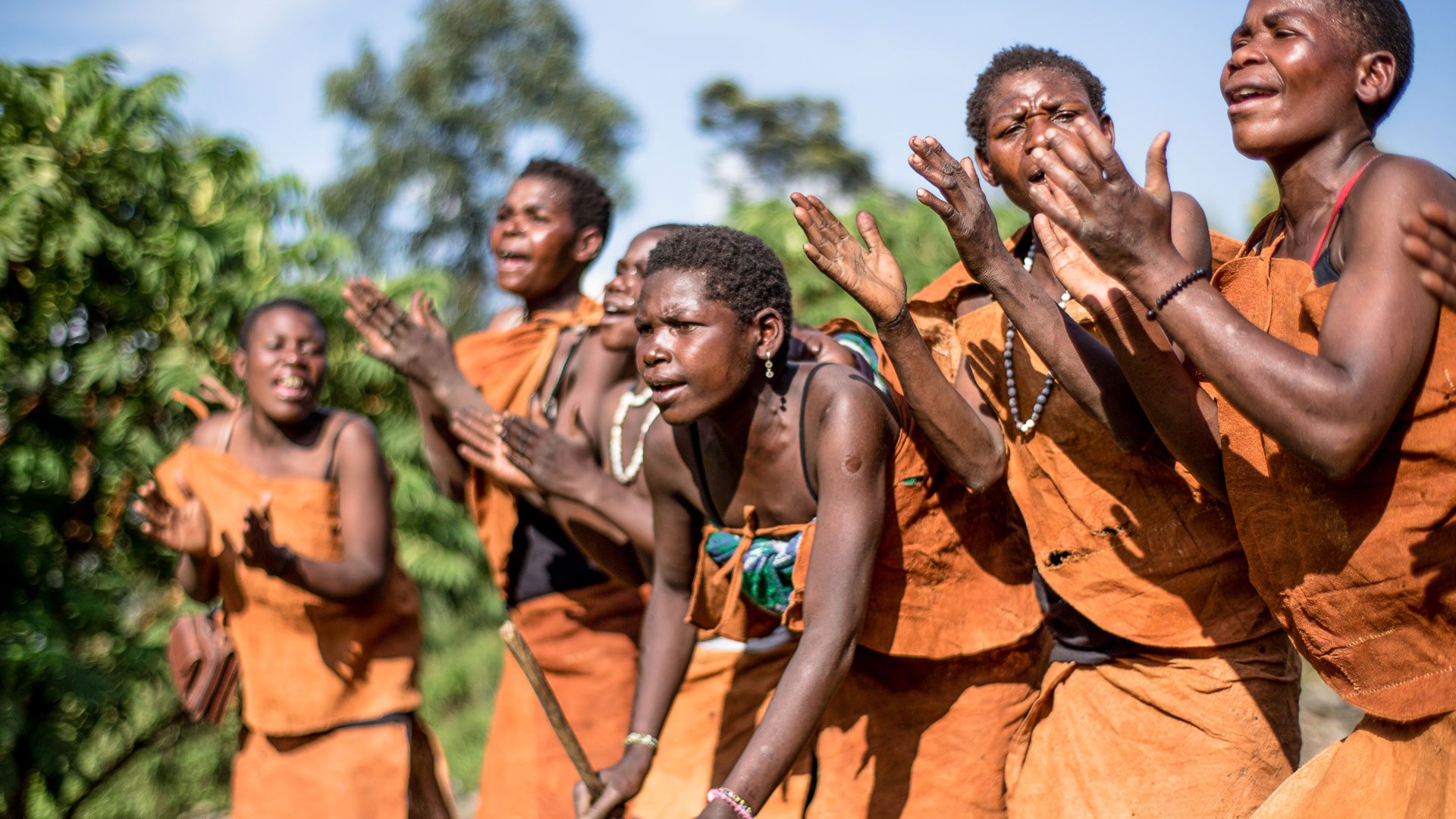
Virunga Volcanic Landscape.
The landscape that frames Bwindi Impenetrable National Park particularly in the Nkuringo and Rushaga sectors of the park’s southern rim is itself a tourist attraction of considerable power. The Virunga Massif, the chain of volcanoes that straddles the borders of Uganda, Rwanda, and the Democratic Republic of Congo, is visible from the elevated ridge positions of the southern sectors with a clarity and a grandeur that makes it one of the most dramatically beautiful panoramic views in East Africa. The volcanic profiles of Mounts Muhabura, Gahinga, Sabyinyo, Bisoke, and Karisimbi visible across the border landscape create a backdrop to the Bwindi experience particularly in morning and evening when the light on the volcanic summits produces colors of extraordinary beauty that elevates the park from a forest destination to a landscape of regional scenic significance.
Bwindi Impenetrable Forest’s Conservation Legacy.
The conservation story of Bwindi Impenetrable National Park is itself a tourist safari attraction in the most meaningful sense an ongoing, living narrative of what happens when a government, a conservation organization, a research community, and a local population commit simultaneously and consistently to the protection of a species and an ecosystem against significant competing pressures. The park’s designation as a UNESCO World Heritage Site, the mountain gorilla population recovery it has anchored, the community conservation model it has pioneered, and the research legacy of the Bwindi Impenetrable Forest Research Trust and the International Gorilla Conservation Programme all contribute to a conservation story that visitors can engage with directly through conversations with rangers, visits to the community conservation projects surrounding the park, and the simple, powerful act of understanding that the permit fee in their pocket is funding the survival of a species.
Conclusion; Bwindi Impenetrable National Park’s tourist attractions are not simply a list of things to see and do. They are a layered, interconnected collection of natural, cultural, and conservation assets mountain gorillas, ancient forest, endemic birds, indigenous people, volcanic landscape, and a conservation legacy whose combined significance makes Bwindi one of the most genuinely important and most deeply rewarding safari destinations on the African continent.